Home Latest News Crime & Investigations
Category:

Crime & Investigations

Maurice Akech

The walls are closing in on National Construction Authority Executive Director Maurice Akech as a damning legal petition lays bare what activists describe as years of catastrophic regulatory failure that has turned Kenya’s construction sector into a killing field.

Human rights activist Francis Awino has thrown down the gauntlet at the High Court, demanding Akech be declared unfit for office and immediately removed for what the petition describes as gross negligence, incompetence and a systemic failure to enforce construction laws that has cost lives and left thousands of Kenyans living in death traps.

The explosive court documents paint a devastating picture of an authority asleep at the wheel while developers flouted safety regulations with impunity, buildings rose illegally into the sky, and enforcement notices were treated as mere suggestions rather than legal orders.

The latest tragedy, the South C building collapse that killed two people, has become the catalyst for what could be Akech’s professional downfall. But it is far from an isolated incident. The petition reveals a chilling pattern of regulatory lapses stretching back years, with deadly consequences that Awino argues were entirely preventable.

According to court filings, investigations by both Nairobi City County and the NCA itself revealed that the doomed South C building was constructed without approved structural plans, lacked mandatory geotechnical assessment reports, and never underwent required statutory inspections. The developer allegedly exceeded the approved 12 floors by adding extra storeys without authorisation, yet construction continued unchecked.

Most damning is the timeline of inaction. The petition reveals that Nairobi City County issued enforcement notices to the developer and contractor warning of violations in May, July and December 2025. Three separate warnings. Three opportunities for the NCA to step in and halt construction. Three chances to save lives.

Yet nothing happened. Construction continued. Workers toiled on the illegal floors. And on January 2, 2026, physics and gravity combined to deliver their inevitable verdict as the building pancaked to the ground, crushing two people to death.

“The NCA, under the leadership of its CEO, failed to enforce compliance with construction and safety standards despite having the mandate to do so,” the petition states bluntly. Awino argues that Akech had direct authority over compliance but failed to enforce regulations, halt construction or sanction developers, describing his inaction as administrative maladministration and abuse of office.

When asked by journalists why the NCA failed to stop construction at the South C site despite the obvious non-compliance, Akech declined to explain, instead directing reporters to a statement issued by Public Service Cabinet Secretary Geoffrey Ruku. The deflection speaks volumes.

Even more troubling is what Awino describes as Akech’s public admission after the collapse that the building was non-compliant at the time it fell. In other words, the regulator knew the building was illegal, knew it was dangerous, yet did nothing to protect the public until it was too late.

But South C is merely the latest chapter in what the petition describes as a broader pattern of regulatory failure under Akech’s watch. The activist points to previous building collapses in Zimmerman in September 2023 and Kahawa West in October 2024, each attributed to poor workmanship, substandard materials and weak oversight.

In Kahawa West, the multi-agency team had condemned the eight-storey building on Wednesday, October 16, 2024, and issued an evacuation order. By Sunday, October 20, the building had collapsed. While tenants were evacuated in time, preventing mass casualties, residents revealed that instead of demolishing the structure, the developer had been allowed to attempt repairs to visible cracks, essentially papering over a structural catastrophe waiting to happen.

The statistics are horrifying. Kenya has recorded 87 building collapses over the past five years, with an estimated 200 people losing their lives and over 1,000 injured, according to NCA’s own reports. The 2018 audit by the National Building Inspectorate found that of 14,925 buildings examined, only 2,194 were safe. That means 723 buildings were classified as very dangerous, while 10,791 were deemed unsafe.

A subsequent 2021 NCA audit revealed that 35 per cent of buildings in Kenya are at risk of failure. These are not hidden problems. These are known dangers, documented in official reports, sitting in government files while Akech has led the authority tasked with preventing exactly these disasters.

The timeline of Akech’s tenure raises uncomfortable questions. Appointed as Executive Director on September 27, 2019, for a four-year term, Akech came to the role with impressive credentials: a master’s degree in Construction Engineering and Management and a bachelor’s degree in Civil Engineering, both from Jomo Kenyatta University of Agriculture and Technology. He is registered as a civil engineer by the Engineers Board of Kenya and holds over 20 years of experience in design, construction supervision and management.

Yet despite this pedigree, the building collapses have continued. In fact, data shows that after a promising decline from 21 collapses in 2015 to just two in 2019, the numbers began rising again under Akech’s watch, with three buildings collapsing in a single week in Nairobi in November 2022.

Professional bodies have been scathing in their assessment of the regulatory environment. Institution of Engineers of Kenya President Shammah Kiteme’s question cuts to the heart of the accountability crisis: “Who was the responsible structural engineer? Is it the one in the NCA records? The one on site?”

The Architects Alliance President Senator Sylvia Kasanga has demanded that the NCA blacklist all contractors with compliance issues and make the list public. “Can NCA blacklist all contractors who have issues? Make it public,” she stated, highlighting what she sees as a culture of impunity enabled by weak enforcement.

Architectural Association of Kenya President Prof George Ndege warned that many buildings would collapse if even a minor tremor struck Nairobi, describing the built environment as living on borrowed time. “We are living by the grace of God,” he said, a damning indictment of the regulatory regime under Akech’s leadership.

The petition seeks a court declaration that Akech is unfit to hold office, along with orders for his removal or suspension. But Awino is not stopping there. He also demands immediate halts to all non-compliant construction projects in Nairobi, full accountability for enforcement lapses between 2021 and 2026, and mandatory inspections and sanctions for violators.

The activist contends that Akech’s actions, or more accurately his inaction, violated constitutional rights to life, fair administrative action and access to safety information, while also breaching the National Construction Authority Act, the Physical and Land Use Planning Act, and county building laws.

The State Department of Public Works and Infrastructure and the NCA itself are listed as interested parties in the case, which has been filed before Justice Lawrence Mugambi.

Perhaps most troubling is the culture of impunity that appears to have taken root under Akech’s tenure. Despite the establishment of the NCA in 2011 specifically to control the construction sector and prevent such disasters, professional bodies say there is no evidence that lessons have been learned from previous investigations.

“Many investigations have been done. There is no evidence that we have implemented the lessons learnt from the dissections and investigations. The failure to make people take responsibility makes this culture of impunity entrenched and there is no way to stop it,” the professional lobbies warned.

The South C building itself exemplifies this culture. The NCA issued registration for the project on November 8, 2023, before mandatory approvals from county government and the National Environment Management Authority were secured. Additional floors were approved without proof of structural review or inspection of ongoing works. The developer was listed as the engineer, creating obvious conflicts of interest. And perhaps most damningly, construction continued despite enforcement notices and stop orders from both the NCA and county government.

All of this happened on Akech’s watch. All of this occurred while he held the authority’s highest office, with direct responsibility for compliance and enforcement.

When Cabinet Secretary Alice Wahome promised that those responsible for the South C collapse would be held accountable and would “carry the burden of punishment,” she may not have anticipated that the net would widen to include the very regulator tasked with preventing such disasters.

“A building that is professionally designed and constructed using the right materials should not collapse and kill people. Those responsible will carry the burden of punishment, and we will crack down on rogue developers, contractors and quacks,” Wahome declared.

But what about rogue regulators? What about enforcement officials who watch violations multiply and do nothing? What about authority directors who preside over a system where 85 per cent of buildings in the capital city are unsafe for human habitation?

The petition argues these are not mere administrative lapses but fundamental breaches of the public trust that demand the ultimate professional sanction: removal from office.

As the case proceeds through the courts, Akech’s defenders may point to the complexity of the construction sector, the multiple actors involved, the political interference, the corruption that oils the wheels of illegal development. All true. All documented. All damning in their own right.

But Francis Awino’s petition poses a simpler question: If the head of the National Construction Authority cannot or will not enforce construction laws, halt illegal developments, or protect Kenyans from buildings that kill, then what exactly is he there for?

Two bodies pulled from the rubble in South C deserve an answer. So do the 200 people who have died in building collapses over the past five years. So do the millions of Kenyans who go to bed each night in structures that professional engineers warn could become their tombs at any moment.

The question before Justice Mugambi is stark: Has Maurice Akech failed in his duty to protect Kenyan lives, and if so, should he pay the price with his job?

As the evidence mounts, the answer appears increasingly clear. And increasingly damning.

0 comment
0 FacebookTwitterPinterestLinkedinTumblrWhatsappTelegramEmail
Minnesota fraud

A nondescript office in Nairobi’s South C neighbourhood hides a dark secret that has sent shockwaves across two continents and put Kenya at the centre of America’s largest Covid-19 fraud investigation.

Capital View Properties Limited, registered on February 24, 2021, became the destination for nearly Sh92 million in stolen American taxpayer money meant to feed hungry children during the pandemic. The firm’s emergence as a key player in the Sh39 billion Minnesota fraud has exposed how international criminals exploited Kenya’s financial system to launder proceeds from one of the most audacious scams in US history.

Court documents reveal that between May and June 2021, just months after its registration, Capital View Properties received three wire transfers totalling Sh91.7 million from Abdiaziz Shafii Farah, the convicted mastermind of the fraud scheme who is now serving 28 years in an American prison.

The transfers came in rapid succession. On May 4, Sh26.4 million arrived. A week later, another Sh38.7 million landed in the company’s accounts. By June 1, a final payment of Sh26.6 million completed the money trail from Minneapolis to Nairobi.

But these transactions were merely the tip of the iceberg. In a chilling WhatsApp conversation intercepted by FBI agents, Abdiaziz boasted to an accomplice that he had invested Sh774 million in Kenya over just three years. The message, sent in December 2021 as American investigators closed in, revealed the staggering scale of money being pumped into Kenyan real estate and businesses.

The Perfect Cover

Capital View Properties appeared legitimate on paper. Corporate records show five shareholders controlling 1,000 ordinary shares. Zeitun Garat Abdinoor holds 150 shares, Abdullahi Maalim Aftin another 150, Abdiwahab Maalim Aftin 100, Abdifatah Maalim Aftin 500, and Abdigani Maalim Aftin 100. The company has no recorded loans or encumbrances, presenting a clean financial profile that masked its sinister purpose.

The firm’s registered address off Shapara Road in South C offers no hints of its connection to international crime. Neighbours and business associates had no idea that the company was processing millions stolen from American children’s feeding programmes during the darkest days of the pandemic.

When contacted, Capital View Properties, a woman identifying herself as Zeitun answered the phone. Her responses were carefully measured, acknowledging the American connection while distancing the company from criminal activity.

“He lives in America and does business with some of the people who have been mentioned,” Zeitun said, referring to one of the directors. “He is one of the directors and he is the one who was sending money.”

She vehemently denied that the company had any knowledge of the fraud, insisting that Abdiwahab Maalim Aftin, one of the directors, had been tried and acquitted by an American jury in June 2024. The acquittal, she argued, proved the company’s innocence.

However, American prosecutors tell a different story. While Abdiwahab may have escaped conviction, the money that flowed through Capital View Properties remains tainted by its origins in the massive Feeding Our Future fraud scheme.

The Minnesota Nightmare

The fraud that funded Capital View Properties was breathtaking in its scope and cynicism. Between 2020 and 2022, a network of predominantly Somali-American fraudsters exploited Covid-19 emergency measures to steal up to Sh38.7 billion meant to feed vulnerable children.

The scheme centred on Feeding Our Future, a Minnesota nonprofit that acted as a sponsor for smaller organisations supposedly running meal programmes for needy kids. When pandemic restrictions loosened oversight requirements, fraudsters saw their opportunity.

They created fake feeding sites, inflated meal counts, and submitted false documentation to claim millions in federal reimbursements. Few, if any, children were actually fed. Instead, the money went towards luxury cars, properties in America and Africa, and lavish lifestyles for the conspirators.

Abdiaziz Farah emerged as the scheme’s leader, personally pocketing over Sh1 billion during his 18 months of involvement. His text messages, recovered by investigators, paint a picture of breathtaking greed and arrogance.

“In 7 months, if things stay the same, you are a multimillionaire with 0 debt,” he texted an accomplice. To another, he wrote simply: “Bro, the next multi-legit millionaires will be me and you.”

True to his word, Abdiaziz went on a spending spree that included five luxury vehicles purchased within six months. Among them was a Sh38.7 million Porsche, a GMC truck, and a Tesla. He bought land in Minnesota and Kentucky, investing approximately Sh541 million in American properties.

But Abdiaziz knew that American law enforcement would eventually come calling. He needed to move money beyond their reach, and Kenya became his sanctuary.

The Kenyan Connection

The full extent of Abdiaziz’s Kenyan investments remains murky, but court documents provide tantalising glimpses. American prosecutors confirm he purchased real estate and a high-rise apartment building in Nairobi using fraud proceeds, investments they admit are now beyond the reach of US law enforcement.

His brother, Ahmednaji Maalim Aftin Sheikh, played a crucial role in moving money to Kenya. The 28-year-old Kenyan national, indicted in September as the 74th defendant in the case, allegedly helped launder and send millions abroad through a series of sham corporate entities and bulk cash smuggling.

Court papers describe how Ahmednaji received funds and helped conceal their origin by investing in Kenyan real estate. In April 2021, he helped Abdiaziz purchase an apartment building in South C, strategically located adjacent to Nairobi National Park. He also facilitated the purchase of land in Mandera Town, near Kenya’s borders with Somalia and Ethiopia.

The brothers’ WhatsApp conversations, now part of court evidence, reveal their criminal partnership. “You are gonna be the richest 25-year-old InshaAllah,” Abdiaziz texted his younger brother in July 2021. Ahmednaji responded: “I love you so much.”

Two months later, Ahmednaji sent his brother a photo of Sh17.8 million in cash. By December, another photo showed banker’s boxes stuffed with Sh34.8 million in cash that Abdiaziz had smuggled to Kenya. The physical movement of currency highlights how the conspirators bypassed international banking safeguards designed to detect money laundering.

From Minneapolis to Diani

Capital View Properties is just one piece of a complex money laundering network that stretches from Minnesota to Kenya’s coast. The fraud’s tentacles reach far beyond Nairobi, touching some of Kenya’s most desirable real estate.

Liban Yasin Alishire, another conspirator who pleaded guilty in 2023, was forced to forfeit the Karibu Palms Resort in Diani, a luxury property on Kenya’s Indian Ocean coastline. He also surrendered a house in Nairobi, several cars, and a boat. At age 43, Alishire’s plea agreement stripped him of assets purchased with his share of the stolen Sh315 million he obtained from the scheme.

The coastal property seizure sent ripples through Kenya’s tourism industry, raising uncomfortable questions about due diligence in high-value real estate transactions. How had no one questioned the source of funds for such expensive purchases? Were banks and lawyers complicit, or simply negligent?

American Fury

The scandal has reignited America’s immigration debate with unprecedented ferocity. US Attorney General Pamela Bondi revealed that 72 of the 78 defendants are of Somali descent, a statistic that has inflamed political tensions.

Tom Emmer, the Majority Whip of the US House of Representatives, has called for the harshest possible measures. “I have three words regarding Somalis who have committed fraud against American taxpayers: Send them home,” he declared on social media. “If they’re here illegally, deport them immediately. If they’re naturalised citizens, revoke their citizenship and deport them quickly thereafter.”

FBI Director Kash Patel described the Minnesota case as “just the tip of a very large iceberg” and promised that investigations would continue. The FBI has deployed additional personnel to Minneapolis, conducting door-to-door raids at suspected fraud sites.

The Department of Homeland Security announced it is actively pursuing defendants who fled to Africa, though officials have not specified which countries are harbouring the fugitives. Five suspects remain at large, their exact whereabouts unknown.

Questions Without Answers

Despite the millions that flowed through Capital View Properties, critical questions remain unanswered. How exactly was the Sh91.7 million invested? Did the company purchase specific properties, or was it used as a holding vehicle for other transactions? Are there additional companies in Kenya serving similar purposes?

The lack of transparency is frustrating both American investigators and Kenyan authorities. While US prosecutors have successfully frozen and seized assets in America, the Kenyan properties remain largely untouched. The complexities of international asset recovery mean that recovering the stolen funds could take years, if it happens at all.

Kenyan financial regulators now face difficult questions about how such large international transfers escaped scrutiny. The Central Bank of Kenya and the Financial Reporting Centre, which monitors money laundering, have remained silent on whether they are investigating Capital View Properties or other companies linked to the scandal.

Lost in the staggering figures and international intrigue is the scandal’s original victims: hungry American children who went unfed while fraudsters enriched themselves.

During the pandemic’s darkest days, when millions of families struggled to put food on the table, these criminals exploited emergency programmes designed to help the most vulnerable. They claimed to serve millions of meals to needy children. In reality, few if any were ever provided.

The psychological impact on Minnesota’s Somali community has been devastating. Law-abiding Somali Americans now face increased scrutiny and discrimination because of the actions of a criminal minority. Community leaders have condemned the fraud while defending their community against collective punishment.

Kenya’s Dilemma

For Kenya, the scandal presents a diplomatic and legal nightmare. American officials are demanding cooperation in tracking assets and potentially extraditing suspects, but Kenya’s sovereignty and legal processes cannot be simply brushed aside.

The case has exposed weaknesses in Kenya’s anti-money laundering framework and raised concerns about the country’s attractiveness to international criminals seeking to hide ill-gotten gains. Real estate, with its high values and relative lack of transparency, remains particularly vulnerable to money laundering.

Former Deputy President Rigathi Gachagua has called on President Donald Trump to pursue fraud beneficiaries in Kenya “Venezuela-style,” referencing aggressive international enforcement actions. However, such dramatic measures would require unprecedented cooperation between Kenyan and American law enforcement, something that has historically been challenging.

As the legal process grinds forward in American courts, Capital View Properties continues to operate from its South C office. The company has not been charged with any crime in Kenya, and without a formal asset freeze, it remains free to conduct business.

Abdiaziz Farah, now 36, faces decades in prison. Beyond his 28-year sentence, he awaits additional sentencing for attempting to bribe a juror with Sh15.5 million in cash. He has been ordered to pay Sh6.1 billion in restitution, money that will be collected through asset seizures and prison wages for the rest of his life.

His brother Ahmednaji awaits trial, facing up to 20 years in federal prison if convicted. The evidence against him appears overwhelming, including photos of cash-stuffed boxes and incriminating WhatsApp messages.

For the shareholders of Capital View Properties, the future is uncertain. Even if they claim ignorance of the money’s origins, they may find their assets frozen as American prosecutors pursue every dollar of stolen funds.

The scandal serves as a stark reminder that in our interconnected world, no country is immune from international crime. A fraud conceived in Minnesota has reached deep into Nairobi’s property market, touching businesses and individuals who may never have set foot in America.

As investigations continue, one thing is clear: the full story of how stolen American Covid funds flowed through Kenyan companies has yet to be told. Capital View Properties is just one chapter in a much larger tale of greed, deception, and international crime that continues to unfold.

The question now is whether Kenyan authorities will take decisive action to investigate these transactions, or whether Capital View Properties and other similar companies will continue operating in the shadows, processing money from sources that dare not speak their name.

0 comment
0 FacebookTwitterPinterestLinkedinTumblrWhatsappTelegramEmail
Mohamed Osman Abdile

In what prosecutors are describing as one of the most audacious cases of employee theft in recent times, a businessman has been charged with stealing a staggering Sh296 million from a city shopping mall over a period spanning seven years.

Mohamed Osman Abdile, who worked at Mega Shopping Mall in Eastleigh, appeared before court on Monday to face a litany of charges that paint a damning picture of systematic looting and elaborate money laundering schemes designed to conceal the source of the stolen funds.

The 30 criminal counts against Abdile read like a thriller: conspiracy to commit a felony, stealing by servant, money laundering, and being in possession of proceeds of crime.

Each charge represents another thread in what investigators allege was a carefully woven web of financial deception.

According to court documents, the theft occurred between January 2018 and February 2025, with Abdile allegedly using his company Fatzam Enterprises Limited to transfer money to various companies and individuals in a bid to hide where it came from.

The prosecution painted a picture of a man who allegedly exploited his position of trust. The money belonged to business mogul Abdi Mohamed Ali and came into Abdile’s possession by virtue of his employment at the mall, the court heard.

Sophisticated Money Laundering Operation

But the theft allegations are only part of the story. Prosecutors allege that Abdile went to extraordinary lengths to legitimize his ill-gotten gains.

The Director of Public Prosecutions charged him with money laundering for concealing the source of over Sh116 million held in accounts at Kenya Commercial Bank, Absa Bank and Equity Bank. Additionally, he was indicted for possessing more than Sh107 million believed by police to be proceeds of crime.

In one incident detailed in court, police on March 12, 2024 discovered Sh4.7 million in an account at KCB Eastleigh Branch registered under Fatzam Enterprises Limited, the company Abdile operated with fellow director Hussein Ibrahim Barre.

Ghost Director and Pending Arrests

Barre, who is jointly charged in the case, did not appear in court for plea taking, raising questions about his whereabouts. The accused faces 17 counts of money laundering and 10 counts of being in possession of proceeds of crime, according to court records.

Investigators say the scheme involved multiple accomplices, some of whom remain at large. Police are yet to arrest other conspirators for arraignment, the court was told.

Bond Granted Despite Magnitude

Despite the gravity of the charges and the massive sums involved, the prosecution surprisingly did not oppose Abdile’s application for release on bond.

He was freed on Sh3 million bond with an alternative cash bail of Sh2 million after entering a not guilty plea to all 30 charges.

The Eastleigh Context

The case comes at a sensitive time for Eastleigh’s business community, which has been working to shake off negative associations and position itself as a legitimate economic powerhouse in Nairobi.

Eastleigh, often dubbed “Little Mogadishu,” is home to several major shopping complexes including the newly opened Business Bay Square Mall, a Sh25 billion development that has transformed the area’s commercial landscape. The neighborhood is a major contributor to Nairobi’s revenue through its bustling wholesale and retail trade.

This theft case, however, serves as a stark reminder that even in Kenya’s most vibrant commercial districts, internal fraud can flourish when oversight mechanisms fail. The seven-year duration of the alleged theft raises uncomfortable questions about financial controls and audit procedures at Mega Shopping Mall.

As the case proceeds through the courts, attention will focus on how an employee could allegedly steal such colossal amounts over such an extended period without detection. The trial is expected to reveal details about the mall’s internal controls, the methods allegedly used to siphon funds, and the network that may have facilitated the laundering of the stolen money.

For now, Abdile remains free on bond as he prepares to fight 30 criminal charges that could see him spend decades behind bars if convicted. The case also shines a spotlight on the need for robust financial oversight in Kenya’s retail sector, where trust and internal controls are often the only barriers between businesses and catastrophic losses.

The matter will be mentioned in court for further directions on the trial date.

0 comment
0 FacebookTwitterPinterestLinkedinTumblrWhatsappTelegramEmail
Julius Mwale

The walls are closing in on US-based billionaire Julius Mwale as a fresh court battle exposes a carefully cultivated image of success that is beginning to crumble under the weight of unpaid bills, bounced cheques, and a growing list of contractors demanding their money.

In a dramatic turn that has set tongues wagging in legal circles, Mwale now stands accused of shifting blame onto a deceased contractor in a desperate bid to escape a Sh17 million debt judgment, even as multiple creditors across two continents sharpen their knives for what could become one of Kenya’s most spectacular business collapses.

The entrepreneur, who has spent years rubbing shoulders with African presidents and Hollywood celebrities while promoting his Sh200 billion Mwale Medical and Technology City in Kakamega, is facing a moment of reckoning that threatens to expose the precarious foundations of his empire.

Mwale Medical and Technology City (MMTC)
Mwale Medical and Technology City

A Pattern Emerges

Court documents and investigations spanning 15 years paint a disturbing picture of a businessman who has left a trail of unpaid contractors, bounced cheques, and broken promises stretching from New York to Nairobi. The total unpaid bills, according to court records in Kenya and the United States, exceed Sh325 million.

The latest controversy involves Sifatronix Limited, a company that claims it supplied murram worth Sh17 million for road construction at Mwale’s flagship project in 2017 but was never paid.

When Sifatronix sued, Mwale’s defense hinged on testimony from the late Dr. Fitzgerald Oketch, who swore an affidavit stating that his company, Epic Agencies, had the contract with Tumaz, not Sifatronix.

Dr. Oketch died unexpectedly in October 2025, just before a crucial court hearing. With the primary witness now silent in death, questions are being raised about whether Mwale’s legal strategy amounts to throwing a dead man under the bus to escape liability.

Justice Freda Mugambi ruled against Mwale in February 2025, piercing the corporate veil to hold him personally liable alongside his company, Tumaz and Tumaz Limited. The businessman is now appealing, but the case has reopened old wounds and drawn fresh scrutiny to his business dealings.

The Kakamega Contractors Speak Out

Sifatronix is far from alone. Multiple contractors, suppliers, traders, and vendors who worked on the Mwale Medical and Technology City project have come forward with similar stories of unpaid bills and broken promises.

Some claim they have been physically prevented from accessing the facility to demand payment. Others say they received only promissory notes that were never honored. Bloggers, content creators, and models hired through a South African agency to promote the project were never paid a dime, with several removing their promotional material in disgust.

In 2018, Mwale was accused of issuing bad cheques to contractors amounting to Sh22 million. Court documents from that period show him seeking to stop police from arresting him over allegations of bounced cheques. He claimed his lawyers had compelled him to write post-dated cheques even after disputing the amounts demanded by contractors.

The scale of the problem became clearer when local residents began speaking out. Many claim they lost large tracts of ancestral land to Mwale after he made empty promises to build residential and rental homes for them. What was once promoted as a “village paradise” and Kenya’s answer to Silicon Valley now stands as a monument to unfulfilled dreams.

The American Debts

Mwale’s troubles are not confined to Kenya. In the United States, where he has long presented himself as a self-made billionaire, a very different picture emerges from court records.

In August 2025, a California court evicted Mwale and his family from a multimillion-dollar estate in Alamo after he failed to pay rent and issued a Sh58 million cheque that bounced. The property, which Mwale had for years presented as his own and even “gifted” parts of to influential figures, was actually a rental. When payments stopped in October 2024, the landlord moved to evict.

Court filings revealed that the lease arrangement not only covered the residence but also included two luxury vehicles, a Bentley and a Mercedes, which Mwale frequently showcased in photographs as symbols of his financial success. The cars, like the house, were not his.

Perhaps most troubling is the case of Fiona Graham, a 95-year-old blind and partially deaf psychiatrist who claims Mwale defrauded her of Sh466 million. Court documents filed in New York Supreme Court in 2019 reveal how Mwale first met Graham when he arrived at her clinic wearing threadbare shoes, having walked from a men’s shelter.

Graham says Mwale befriended her under false pretenses, eventually coercing her into remortgaging her properties to lend him money. Despite signing a promissory note in 2019 agreeing to repay Sh466 million by November 2020, with eight percent annual interest, Mwale has reportedly failed to honor the debt. As of February 2024, Graham was owed Sh466 million in principal plus Sh176 million in accumulated interest.

The Shaw Saga

In 2024, American couple Mathew and Brooke Shaw sued Mwale and his wife Kaila for Sh220 million, claiming they were lured into investing in fraudulent projects. The Shaws said they met the Mwales at a private dinner in Utah in February 2022, where the couple presented themselves as billionaires with connections to powerful figures.

Court documents detail how Mwale shared text messages and recordings of alleged private video calls with prominent Americans, including Senator Mitt Romney and US Ambassador to Kenya Meg Whitman, to enhance his credibility. The Shaws were invited to what they believed was the Mwales’ estate in San Jose, California, where they were shown expensive automobiles and a wine cellar reportedly valued at Sh32.5 billion.

The American couple claim they invested Sh220 million in projects including geological surveys in the Democratic Republic of Congo for a battery manufacturing plant. When they visited Kenya in August 2022 to inspect their investments, they discovered the reality was vastly different from the promises.

The hospital Mwale claimed was the world’s largest and most advanced with 5,000 beds turned out to be largely incomplete, with only one wing operational, functioning primarily as a basic clinic treating local children for malaria. The promised golf course was far from complete, and the rental homes built for farmers were described as little more than vacant concrete boxes with no facilities.

The Shaws eventually withdrew their lawsuit in May 2025 after a settlement was reached, but only after the case had been transferred between courts in Utah and New York. The withdrawal was done “without prejudice,” meaning they retain the right to refile in the future.

Earlier Warning Signs

Mwale’s troubles in America date back much further. In 2009 and 2010, his company SBA Technologies was sued in New York for failing to pay rent for its headquarters on Fifth Avenue. By 2015, the unpaid rent and interest charges totaled Sh27 million.

In 2010, two co-directors of an addiction treatment center filed a complaint claiming they were deceived into investing Sh34 million in SBA Technologies. They said Mwale told them their investment would increase more than 30-fold to Sh1.1 billion if the company was listed on the stock exchange. The company was never listed and was dissolved in 2010, though it was later revived.

Mwale has also faced questions about his credentials. While he claims to have studied at Columbia University, a university spokesperson confirmed he attended in 2004 but did not receive a degree. The Kenya Defence Forces dismissed his claims of being a qualified radar technician or aeronautical engineer, stating he was fired for being absent without leave in 1999.

The Kakamega County Battles

Back in Kenya, Mwale’s relationship with local authorities has been rocky from the start. In 2017, Kakamega County Government threatened to demolish the Mwale Medical and Technology City project, claiming the investor violated multiple laws including the Physical Planning Act, Public Health Act on Housing and Sanitation, County Government Act, and County Land Registration Act.

The county argued that Mwale never received proper clearance to undertake the development. He went to court and obtained orders blocking the demolition, but the legal battles strained relations with local authorities.

Despite these troubles, Mwale has continued to announce ambitious expansion plans. He has claimed partnerships to build similar medical cities in Botswana, Ghana, the Republic of Congo, Sierra Leone, and the Democratic Republic of Congo. However, investigations have found that many of the companies cited as partners on MMTC’s social media pages have not actually invested.

The Media Campaign

Throughout these controversies, Mwale has maintained an aggressive media campaign. In the early years of the Kakamega project, mainstream media carried glowing articles describing it as a “game changer” that would transform western Kenya. The project was compared to Silicon Valley and promoted as Kenya’s gateway to becoming a technology hub.

Celebrity endorsements added glamour to the project. Italian influencer Elisa De Panicis, an ex-girlfriend of Portuguese football star Cristiano Ronaldo, visited the medical facility and reportedly enrolled more than 300 family members in a National Hospital Insurance Fund scheme that was fully sponsored.

High-profile events were organized, including the 2013 Forbes Billionaires Symposium in New York, sponsored by SBA Technologies. Guests included presidents from Congo, Mozambique, Kenya, and Ghana. The glitz and glamour created an aura of legitimacy around Mwale’s ventures.

However, seven years after the project started, the media attention has largely dried up. Many of the early promotional stories have been quietly suppressed as the reality on the ground fails to match the promises.

The Current Crisis

The Sifatronix case has become a flashpoint because it exposes vulnerabilities in Mwale’s business model. The High Court’s decision to pierce the corporate veil and hold him personally liable sets a dangerous precedent for his other ventures. If other creditors follow suit and succeed in holding Mwale personally accountable, the consequences could be catastrophic.

His defense strategy of relying on testimony from the now-deceased Dr. Oketch has been criticized as opportunistic. Legal observers note that with Oketch unable to be cross-examined or provide additional context, Mwale is effectively using a dead man’s words as a shield while avoiding accountability.

The case has also become entangled in a broader controversy involving his lawyer, Senior Counsel Nelson Havi, and the Judiciary. Havi has been waging a public campaign alleging corruption among judges, claims the Judiciary has vehemently denied. Havi says he was sanctioned by Justice Mugambi in October 2025 for his outspoken criticism, raising questions about whether the judgment against Mwale is connected to this feud.

As Mwale’s appeal proceeds to the Court of Appeal, the stakes could not be higher. A loss would not only confirm his personal liability in this case but could embolden other creditors to pursue similar claims. The precedent could unravel the corporate protections that have so far shielded him from the full weight of his debts.

Multiple sources familiar with his operations suggest that other creditors are watching the case closely. If the appeal fails, it could trigger a cascade of lawsuits that would finally bring Mwale’s empire crashing down.

For now, the entrepreneur remains defiant, continuing to market his vision of transforming Africa through technology and healthcare. But as the unpaid bills pile up and the legal battles multiply, questions are growing louder about whether Julius Mwale is a visionary entrepreneur or simply a man who has mastered the art of staying one step ahead of his creditors.

The contractor’s widow may never see justice for her late husband’s work. The blind 95-year-old psychiatrist may never recover her life savings. The American investors may never recoup their millions. And the Kakamega contractors may continue to wait in vain for payment.

In throwing a dead contractor under the bus to escape his debts, Julius Mwale may have finally gone too far. The court of public opinion has already reached its verdict. Now it remains to be seen whether the Court of Appeal will agree.

A representative for Mwale declined to comment, citing ongoing court proceedings. But his silence speaks volumes as the walls close in on a man who once promised to build cities but may end up buried under the rubble of his own making.

0 comment
0 FacebookTwitterPinterestLinkedinTumblrWhatsappTelegramEmail
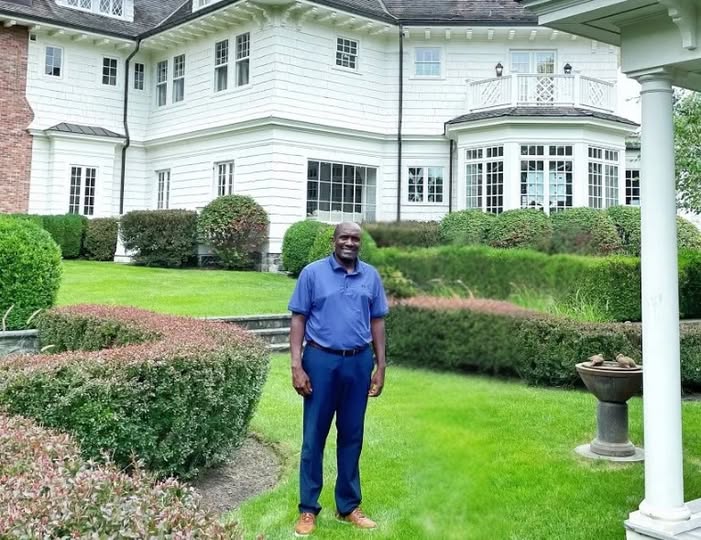
James Mabele Magio

A budding politician eyeing the Budalangi constituency parliamentary seat in the 2027 general elections has been implicated in a sophisticated international fraud ring operating from Nairobi that has allegedly defrauded foreign investors of millions of shillings in fake gold deals.

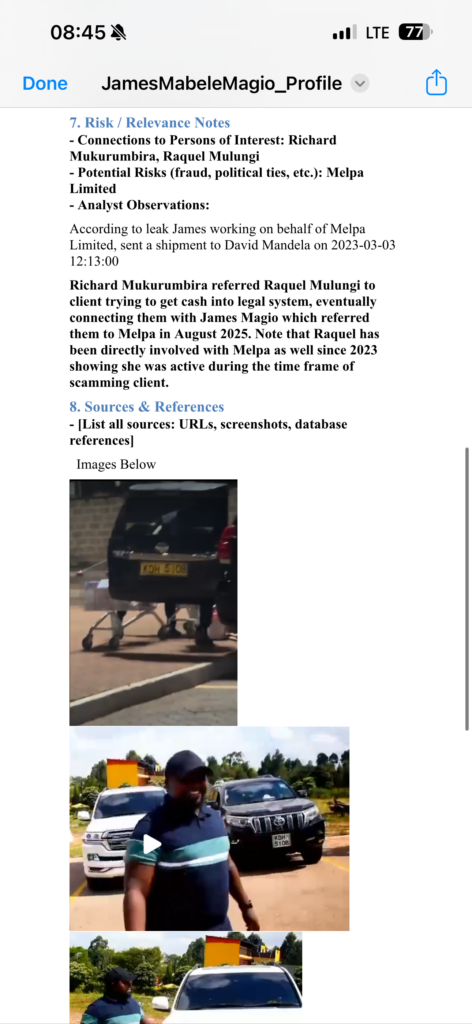
James Mabele Magio, who describes himself on social media as a news reporter and program presenter, has been identified in leaked intelligence documents as a key player in an elaborate scam involving a fake logistics company used as a front to lure unsuspecting buyers from Europe, the Middle East, the United States, and the United Kingdom.

The damning revelations come from confidential files by a whistleblower who claims intimate knowledge of the operation.

The dossier includes internal shipment databases, customer lists, email correspondence, and detailed intelligence profiles suggesting Magio worked as a fixer, connecting foreign clients to what appeared to be legitimate cargo shipments that investigators believe never existed.

At the heart of the scheme is Melpa Limited, a Nairobi-based company masquerading as an international freight forwarder with expertise in customs clearance and warehousing. The company’s polished website advertises decades of experience and lists a professional address near Jomo Kenyatta International Airport.

However, domain records examined by investigators reveal the site was only registered in 2023, with operators frequently shifting between hosting providers and recently settling on Swiss-based servers.

According to the leaked documents, victims were persuaded to wire large sums of money for freight charges, insurance premiums, clearance fees, and verification costs for sealed cargo containers supposedly containing gold bars awaiting export.

In one particularly egregious case documented in the files, a victim reportedly lost more than 100,000 dollars and was subsequently pressed to send an additional half-million dollars to allegedly release the phantom shipment.

The operational patterns mirror those of notorious gold scam rings that have made Nairobi what law enforcement officials describe as the global epicenter of precious metals fraud.

Nairobi’s illicit gold underworld is estimated to involve about $28 billion, according to research by the Global Initiative Against Transnational Organised Crime.

Detectives have repeatedly arrested individuals staging sophisticated fake gold operations using warehouses, branded packaging and counterfeit mineral certificates.

Last year in Lang’ata, officers recovered sand-filled boxes packaged as gold bullion alongside bogus assay reports and forged export papers.

In similar cases across the capital, foreign investors have lost hundreds of thousands of dollars for shipments containing scrap metal or stones.

The Melpa operation appears to represent an evolution of these techniques, featuring unprecedented levels of organization and international coordination.

Magio, who maintains an active social media presence promoting his political aspirations and charitable work through the Mabel Foundation, appears repeatedly in communication logs and shipment clearance documents provided to investigators.

The files suggest he allegedly acted as an intermediary, vouching for the legitimacy of transactions and facilitating connections between foreign clients and the fraudulent operation.

His public profile shows connections to media work in Western Kenya, including stints as a correspondent for Western Nyota TV and Radio and presenter at Bulala FM.

On Facebook, where he uses multiple accounts, Magio promotes his political ambitions for the 2027 parliamentary race in Budalangi, a flood-prone constituency in Busia County with approximately 66,723 residents.

He studied at Kenyatta University and runs business interests including what appears to be a Belaire champagne distributorship.

The intelligence dossier identifies several other alleged key figures in the network.

Markos S Baghdasarian, an Armenian American, appears in the documents with investigators noting his criminal history in the United States where public records show he once served prison time for involvement in shipping petroleum products to Iran without proper licensing while associated with Delfin Group Inc.

The whistleblower believes he now plays a strategic or financial role in coordinating the Nairobi operation.

Richard J Mukurumbira, identified as a UK-based associate, surfaces in email chains involving payment routing and offshore escrow arrangements.

Raguel Mungli, described as a Nairobi contact, allegedly coordinates client interactions and forwards the forged documents designed to reassure victims their shipments are genuine.

According to the leaked material, which includes a profile document dated with references to transactions from 2023, Mukurumbira allegedly referred Mungli to a client attempting to legitimize illicit funds, eventually connecting them with Magio who in turn directed them to Melpa in August of last year.

The documents note that Mungli had been directly involved with Melpa since 2023, demonstrating sustained criminal association during the period when clients were being scammed.

What makes this operation particularly alarming is its professional veneer.

The forged documents recovered by investigators include branded airway bills, export stamps, verification receipts and shipment movement logs that closely mimic legitimate cargo documentation.

The company website mirrors established freight firms in design and corporate language.

Even the business address appears to have been copied from a genuine logistics company in the city.

Most victims, especially those making contact from abroad, assume they are dealing with a reputable Nairobi freight handler.

The customer database raises additional red flags, with some names belonging to individuals previously associated with fraud investigations or suspicious business activity.

The whistleblower, who claims to have provided only a fraction of available evidence, believes Melpa represents merely one tentacle of a much larger network involving local and foreign actors, including businessmen, political aspirants and individuals with documented criminal records across multiple jurisdictions.

Kenya’s gold scam industry has grown increasingly sophisticated, bankrolled by networks that exploit weak regulatory oversight, fragmented international cooperation and the desperation of victims willing to believe Nairobi serves as a major hub for precious metals exports.

Recent high-profile arrests include US national Sergio Patrick Antonucci, charged in December 2024 with defrauding a businessman of over Sh674 million in a fake gold deal.

This case stands out for its corporate structure and global reach.

It employs a branded identity, international hosting infrastructure, coordinated digital records and individuals spanning multiple countries with varying criminal backgrounds. If the leaked documents prove authentic, Nairobi may be hosting one of the most organized precious metals fraud operations in recent years.

The revelations demand immediate investigation by the Directorate of Criminal Investigations’ Financial Crimes Unit, the Anti Narcotics and Organised Crime Directorate, Interpol’s regional desk and foreign agencies with jurisdiction over international fraud and money transfers.

DCI Director-General Amin Mohamed Ibrahim has acknowledged the scope of the problem, describing it as involving a huge cartel of Kenyans, Congolese, Liberians, Nigerians and Ghanaians operating in a very sophisticated manner.

Victims remain reluctant to speak publicly, which helps perpetuate the fraud.

The whistleblower claims to have lost contact with one victim who vanished after losing more than 100,000 dollars, allegedly pressured repeatedly to send additional money to release a shipment that likely never existed.

Multiple attempts by this publication to reach Magio for comment proved unsuccessful.

Calls to his listed mobile number went unanswered and messages sent via WhatsApp and social media platforms were not returned. Similarly, attempts to contact other individuals named in the intelligence report yielded no response.

The Mabel Foundation website and associated social media accounts show no indication of the allegations, instead featuring photographs of community outreach activities and political campaign materials positioning Magio as a grassroots leader committed to development in Busia County.

As Kenya grapples with its reputation as a haven for gold fraud, this case underscores how criminal networks are evolving beyond crude operations to adopt corporate facades and international coordination.

The whistleblower has indicated that more files exist, including bank transfer records and communications between alleged organizers, suggesting this investigation may only be beginning to expose the full scope of the operation.

For a politician seeking to represent one of Kenya’s most economically challenged constituencies, where the monthly mean household income hovers around Sh3,315 and residents struggle with annual flooding disasters, the allegations represent a devastating blow to credibility before the campaign has properly begun.

The question now facing investigators is whether James Mabele Magio will answer questions about his alleged role in an international fraud ring, or whether he will join the growing list of individuals connected to Kenya’s thriving fake gold industry who manage to evade accountability despite mounting evidence of systematic criminal enterprise.

0 comment
0 FacebookTwitterPinterestLinkedinTumblrWhatsappTelegramEmail
Cyrus Jirongo's final moments

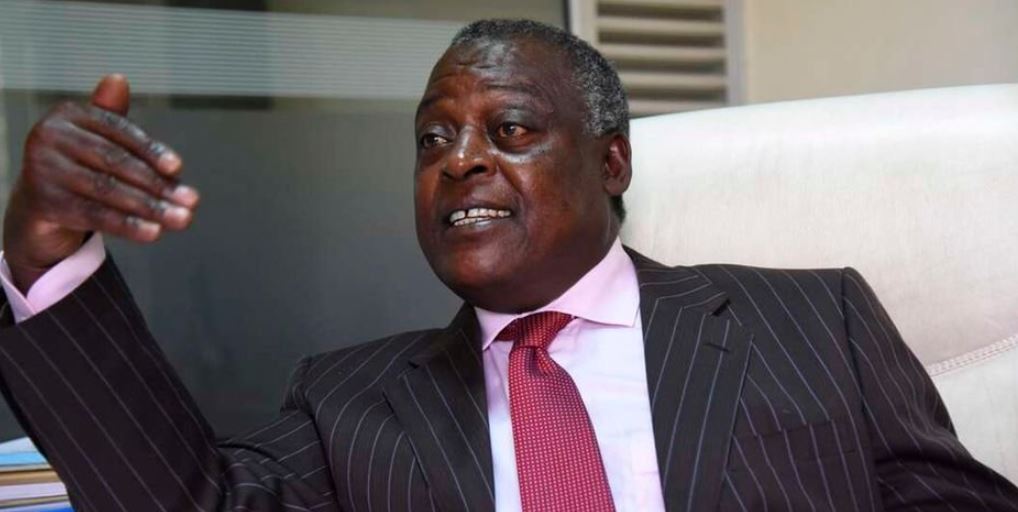
The late politician Cyrus Jirongo’s final moments have taken a dramatic turn after new details suggested that he was most likely being trailed before he met his death in a tragic accident at Karai, along the busy Nairobi-Nakuru Highway.

As the police focus on Park Place along Magadi Road in Karen, the last known location Jirongo visited before the fatal crash, a proper analysis of the CCTV footage has exposed more details, raising further questions about the circumstances that led to the fatal crash of Jirongo.

Jirongo had reportedly spent the evening at Karen Oasis with National Assembly Speaker Moses Wetang’ula and city real estate mogul Rebman Malala before telling friends he was heading home to Gigiri.

Cyrus Jirongo
Cyrus Jirongo

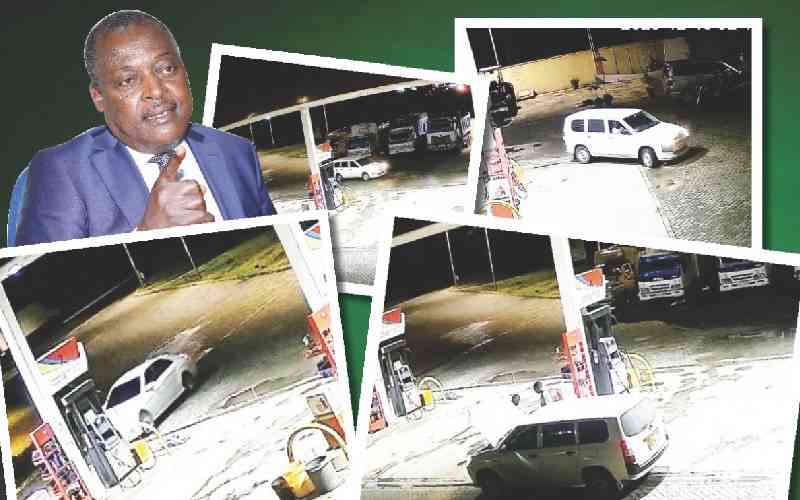
However, questions are now being raised about the final movements of Jirongo, including a white Probox seen in the CCTV footage.

The CCTV footage that was analysed by the Directorate of Criminal Investigations (DCI) detectives investigating the matter shows Jirongo’s Mercedes Benz vehicle entering a petrol station at about 2:18 a.m., then making a U-turn before rejoining the highway, where a bus later collided head-on with his car.

Separate footage now shows a Toyota Probox entering the station seconds before the crash, which has raised questions in public discussions of the final moments of Jirongo.

On Saturday, December 13, 2025, at dawn, a white car drove into the petrol station right behind Jirongo without fuelling and stopped at pump number two.

It had three men, as seen in the CCTV footage. One of them got out and walked to where Jirongo’s car had been and then returned. A second man stepped out and walked to the co-driver’s door as a third man peeped out of the car.

It was at that time that the accident, according to CCTV footage, happened. The coincidence raises fresh questions about a car seeking no service at a station and being followed by the death of a prominent personality.

Cyrus Jirongo’s autopsy

Family pathologist Joseph Ndung’u on Wednesday, December 17, 2025, revealed that Jirongo died from a blunt force trauma that caused severe injuries to the chest, abdomen, spine, and legs.

Jirongo succumbed to injuries sustained in a road traffic accident involving his Mercedes-Benz and a Climax Coaches bus at the Karai area along the busy Nairobi-Nakuru highway.

DCI Investigations into Jirongo’s death

The DCI on Tuesday, December 16, released new details into the circumstances surrounding the death of Jirongo, and revealed that it had kicked off a probe into his death.

The DCI stated that the collision occurred at approximately 2:19 a.m., resulting in a head-on collision. Investigators say the force of the crash pushed Jirongo’s vehicle about 25 metres from the point of impact, while the bus came to rest roughly 50 metres away.

A combined team of homicide detectives and forensic experts from the National Forensic Laboratory visited the scene, documented evidence, and secured key exhibits. Among the critical evidence recovered was CCTV footage from Eagol Petrol Station, located near the crash site.

According to the DCI, preliminary analysis of the footage shows that at 2:18:40 a.m., Jirongo drove into the petrol station from the Nairobi direction but did not refuel. At 2:19:10 a.m., his vehicle stopped at the station’s exit before making a right turn back towards Nairobi at 2:19:19 a.m.

Moments later, at 2:19:25 a.m., the CCTV captured the PSV bus ramming into his vehicle.

Detectives have interrogated the bus driver, Tyrus Kamau Githinji, who had earlier recorded a statement at the Naivasha Traffic Base. He has been released on cash bail pending further investigations into the offence of causing death by dangerous driving.

0 comment
0 FacebookTwitterPinterestLinkedinTumblrWhatsappTelegramEmail
Ramji brothers

Three brothers facing criminal charges over an alleged Sh350 million land fraud involving the National Social Security Fund (NSSF) have gone on the offensive, petitioning the High Court to remove the Director of Public Prosecutions (DPP) Renson Ingonga and Director of Criminal Investigations (DCI) Mohammed Amin from office.

In a constitutional petition filed in Nairobi, Harish Ramji Manji, Ashvin Ramji Manji, and Ashvin Ramji Bharat accuse the two top law enforcement officials of gross abuse of power, violation of their fundamental rights, and defiance of binding court decisions by sanctioning their arrest and prosecution.

Through senior counsel Nelson Havi, the brothers want the court to declare Ingonga and Amin unfit to hold public office and to order them to jointly pay Sh300 million in damages for alleged violations of the Bill of Rights.

The trio also seeks far-reaching orders barring the DPP and the DCI from initiating or sustaining any criminal investigations or prosecutions arising from the acquisition and ownership of the disputed parcel of land, which they say was lawfully purchased from the NSSF.

At the centre of the dispute is land valued at about Sh350 million, which investigators allege was fraudulently acquired. However, the Ramji brothers argue that the matter has already been conclusively determined by superior courts.

According to the petition, the Court of Appeal found that the brothers are the duly registered owners of the property, having acquired it through a valid purchase and transfer for valuable consideration from the NSSF. They further state that Mombasa Cement Limited, which had challenged the ownership, sought leave to appeal to the Supreme Court, but its application was dismissed in September last year.

Despite those decisions, the brothers contend that the DPP and the DCI unlawfully revived the dispute through criminal proceedings, effectively reopening issues that had already been settled by the highest courts.

“It is our case that the DPP and the DCI have no authority to countermand, review or sit on appeal over decisions of the Court of Appeal and the Supreme Court,” the petition reads.

They accuse the two offices of acting in bad faith and in violation of Article 10 of the Constitution, which binds all state officers to uphold the rule of law, as well as Article 244, which governs the conduct of the National Police Service.

The brothers also take issue with the manner in which the investigations were conducted, accusing DCI Amin of abusing his constitutional mandate by publishing their photographs and statements on social media, identifying them as suspects in alleged land fraud.

They want the High Court to restrain the DPP and DCI from publishing or circulating any further statements linking them to criminal wrongdoing and to compel the DCI to remove their photographs from all social media platforms.

“The public shaming through publication of our images and arrest over a matter already determined by the courts amounts to a grave violation of our rights to dignity, fair administrative action, and fair trial,” they argue.

The petition now sets the stage for a high-stakes constitutional battle that pits private property rights and finality of court decisions against the investigative and prosecutorial powers of the State.

The DPP and the DCI had not filed their responses to the petition by the time of publication.

0 comment
0 FacebookTwitterPinterestLinkedinTumblrWhatsappTelegramEmail
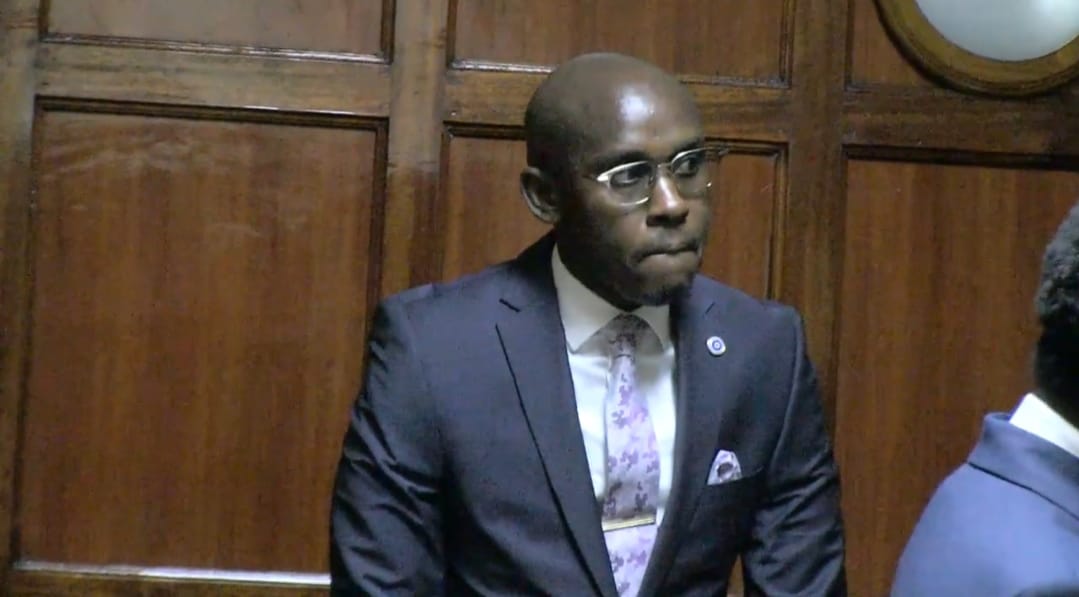
Abbas Bardu Omuyoma

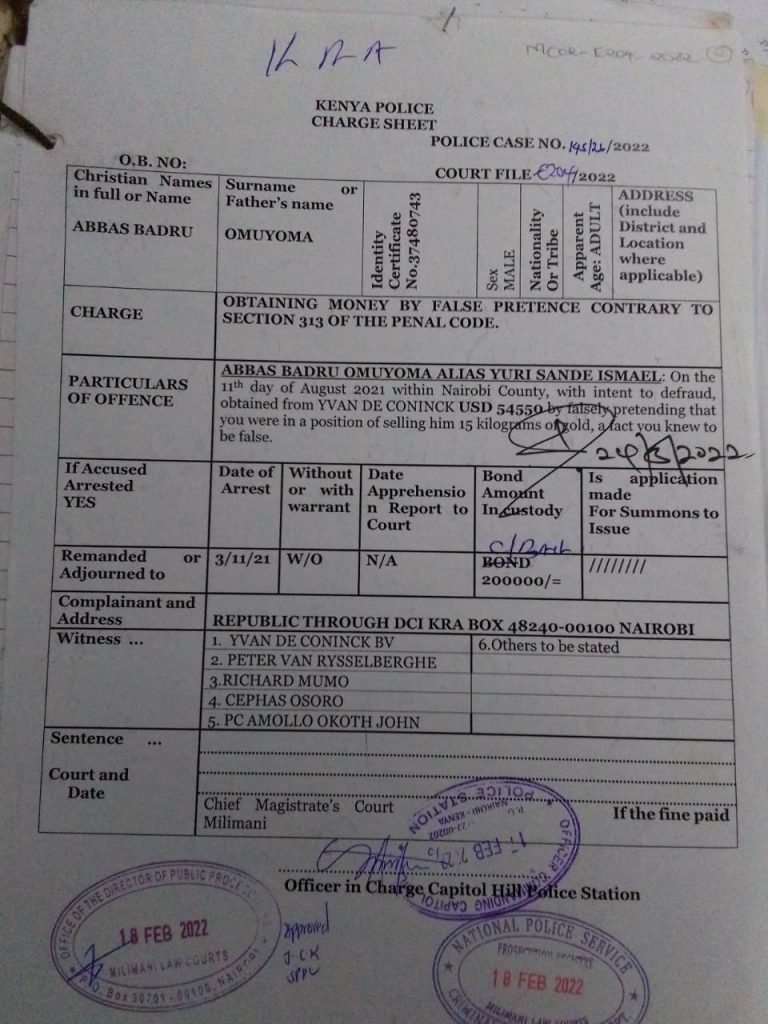
A Nairobi magistrate’s court has acquitted a city businessman who had been charged with defrauding a Canadian national of KSh 8.1 million in an alleged gold scam.

Abbas Bardu Omuyoma was accused of obtaining USD 54,550 (approximately KSh 8.1 million) from Yvan De Coninck on August 11, 2021, by falsely claiming he was in a position to sell 15 kilograms of gold.

The case was heard before Milimani Senior Principal Magistrate Robinson Ondieki, who had earlier placed Omuyoma on his defence.

However, in a ruling delivered after the close of the four-year trial, the magistrate acquitted the businessman, finding that the prosecution had failed to meet the required threshold to sustain the charges.

The court heard that the case arose from a proposed gold transaction that never materialised due to disagreements among the parties involved.

In his defence, Omuyoma told the court that his role was limited to facilitating discussions between the parties and that he did not personally receive any money linked to the deal. He said he issued an invoice in his capacity as an agent, with the expectation of earning a commission, but maintained that no payment was ever made to him.

Omuyoma testified that he was approached by a woman identified as Madam Pinky, who asked him to help source a supplier for the gold. He stated that any funds related to the failed transaction were deposited into an escrow account associated with entities known as Blue Creek and Jason, and not into his personal accounts.

He further told the court that he later withdrew from the negotiations and that after the parties fell out, he was summoned by the Directorate of Criminal Investigations (DCI) to record a statement regarding the collapsed deal.

The magistrate ultimately ruled that the evidence presented by the Office of the Director of Public Prosecutions was insufficient to prove the charges against Omuyoma beyond a reasonable doubt.

0 comment
0 FacebookTwitterPinterestLinkedinTumblrWhatsappTelegramEmail
SHA fraud

The Directorate of Criminal Investigations (DCI) has intensified its crackdown on fraud within Kenya’s healthcare system, unveiling major progress in ongoing investigations targeting facilities audited by the Social Health Authority (SHA).

In an update released on Wednesday, December 17, 2025, regarding the probe, detectives from the Investigations Bureau at DCI headquarters confirmed that they are conducting a wide-ranging investigation into alleged fraudulent activities involving medical facilities across the country.

The facilities under scrutiny are located in Nairobi, Homa Bay, Wajir, Kilifi, Kakamega, Bungoma, Busia, Kisumu, Vihiga, and Kajiado counties.

According to the DCI, 18 case files have already been forwarded to the Office of the Director of Public Prosecutions (ODPP) for review and legal direction. Of these, the ODPP has approved the prosecution of nine cases, marking a significant step forward in holding suspects accountable.

Meanwhile, five additional case files are still awaiting review and guidance from the ODPP, while three files have been returned to the DCI for further investigations. Investigators are also working on seven more case files that are yet to be completed before submission to the ODPP.

“So far, 18 case files have been forwarded to the Office of the Director of Public Prosecutions (ODPP) for review and legal guidance. The ODPP approved the prosecution of 9 cases, while 5 more case files are waiting for review and advice from the ODPP. Additionally, 3 case files have been returned to the DCI for further investigations, and 7 case files are still being investigated before being submitted to the ODPP for review and guidance,” the DCI stated.

In total, 24 suspects drawn from various medical facilities across multiple counties have so far been charged, as authorities signal that the net is widening and more arrests could follow.

The DCI reiterated its firm commitment to protecting public resources and restoring integrity in the healthcare sector, warning that no individual or institution involved in the alleged fraud will be spared.

0 comment
0 FacebookTwitterPinterestLinkedinTumblrWhatsappTelegramEmail
Nairobi Regional Commissioner Gilbert Kitiyo.

At least 126 organised criminal gangs are operating within Nairobi.

Nairobi Regional Commissioner Gilbert Kitiyo has said the government managed to point out the gangs following an extensive intelligence-led mapping exercise.

According to Kitiyo, the gangs were uncovered through a targeted programme focusing on organised crime and emerging security threats.

The security boss, while speaking on Radio Generation, said the authorities had already moved from intelligence gathering to enforcement, with arrests ongoing across the city.

“When it comes to organised crime, these are criminals who use all manner of tricks and ways to reach out to people,” Kitiyo said.

“In Nairobi, we have recorded almost 126 criminal gangs using various names.”

According to the regional commissioner, the gangs operate in defined zones across the city and rely on structured leadership, communication networks, and social spaces to recruit and coordinate criminal activity.

He said security agencies have undertaken detailed profiling of the groups, including identifying their leaders, operational areas, and methods.

“What we normally do is very clear mapping where we identify those groups and even gang leaders, their telephone numbers, where they operate, and how they operate, and then we take care of them,” Kitiyo said.

The mapping exercise is part of a broader government initiative launched on October 15 this year under the Rapid Results Initiative (RRI) on insecurity and organised crime.

Kitiyo said the programme was designed to deliver quick, measurable gains in the fight against criminal networks through coordinated, multi-agency action.

“On October 15 this year, we launched a programme called RRI on insecurity and organised crime,” he said.

“We did the mapping to understand these groups, and that’s how we came up with the 126 groups.”

Following the intelligence phase, the operation has shifted to targeted enforcement.

Kitiyo said security agencies are now focusing on individual gang members and leaders, leading to a series of arrests in recent weeks.

“Now we are targeting individuals, and so many of them have been arrested, and we continue arresting them even now,” he said.

The RRI approach, according to the commissioner, goes beyond gang arrests to address enablers of crime within communities.

Kitiyo said authorities identified specific locations commonly used by criminal groups to plan, recruit, and hide from law enforcement.

“With that RRI, there are a number of things we were focusing on, including criminal gangs, cartels, illicit brew dens,” he said, adding that many gang members “hang around there.”

Pool tables and informal entertainment joints were also flagged as key congregation points used by criminal elements to coordinate activities and recruit young people into gangs.

Kitiyo said security teams have intensified patrols, inspections, and crackdowns in such locations as part of the wider operation.

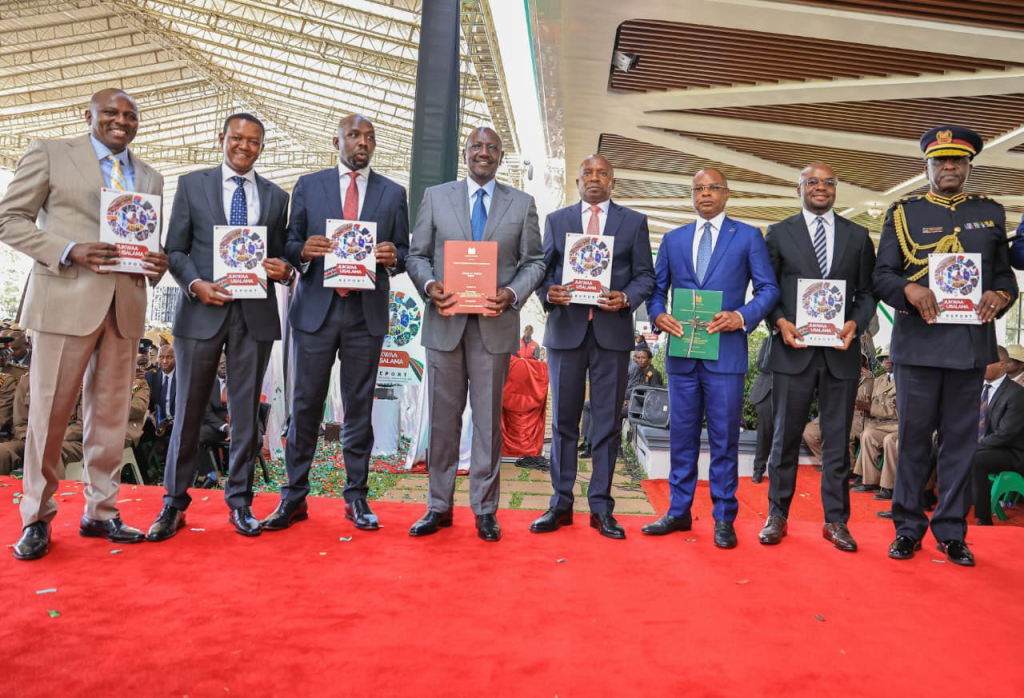
Jukwaa la Usalama Report

The revelation comes days after a new security brief delivered to President William Ruto exposed a chilling reality: Kenya is facing an unprecedented surge in gang activity, with Nairobi alone hosting more than 130 active criminal groups, making it the country’s biggest breeding ground for organised crime.

The explosive Jukwaa la Usalama Report, compiled by security experts and intelligence analysts, paints a grim picture of a country where gangs, some barely known to the public, are tightening their grip on neighbourhoods, youth, politics, and even land ownership.

According to the report, Nairobi is now the epicentre of the crisis, with over 130 gangs involved in everything from petty extortion to political violence, kidnappings, murder, and election-related mercenary work.

“Some of the gangs are structured and highly organised, while others are amorphous groups that regroup only when hired for assignments,” the report states.

Among those listed are:

  • Jeshi Jinga
  • 42 Brothers
  • M23
  • Kapenguria Six
  • Usiku Sacco

These gangs operate across estates such as Kibera, Dandora, Mathare, Kayole, and Mukuru, often controlling entire zones through fear and brutality.

0 comment
1 FacebookTwitterPinterestLinkedinTumblrWhatsappTelegramEmail

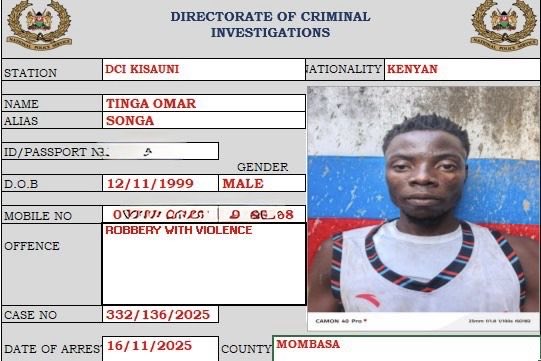
Police have arrested a man linked to a string of violent robberies in Kiembeni, Kisauni Sub-County in Mombasa County.

Directorate of Criminal Investigations (DCI), in a statement issued on Tuesday, December 16, 2025, said detectives based at Kisauni had arrested Omar Tinga, aka Songa, whom the officers have described as a notorious criminal long linked to a string of violent robberies.

“Kisauni Sub-County detectives have arrested Omar Tinga, aka Songa, a notorious criminal long linked to a string of violent robberies in Kiembeni,” the statement read in part.

According to the anti-crime agency, the arrest followed credible intelligence from members of the public, which led detectives straight to the suspect’s hideout in Bombo Village, where he was arrested.

Police further say Tinga is feared for his ruthless attacks on victims. He has been detained and is currently undergoing processing ahead of his court arraignment.

“The arrest followed credible intelligence from members of the public, which led detectives straight to his hideout in Bombo Village, where he was cornered and apprehended. Tinga is feared for his ruthless attacks on victims, leaving a trail of terror in his wake. He is currently in police custody, undergoing processing, pending arraignment,” the DCI stated.

0 comment
0 FacebookTwitterPinterestLinkedinTumblrWhatsappTelegramEmail
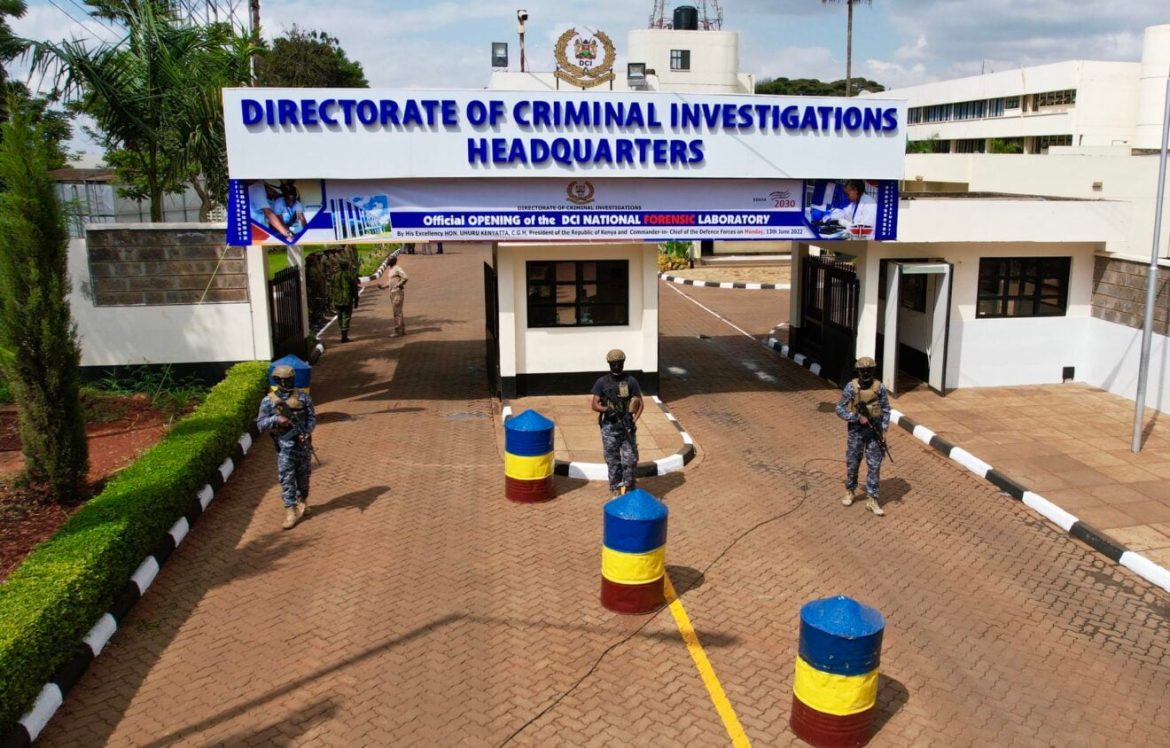
DCI Headquarters

What was meant to be a day of celebration and academic triumph turned into heartbreak and shock on Saturday after detectives from the Directorate of Criminal Investigations (DCI) dramatically halted an illegal graduation ceremony in Changamwe, Mombasa County.

Officers from the DCI Headquarters’ Serious Crime Unit (SCU), working alongside officials from the Commission for University Education (CUE), stormed Victory International Church where the ceremony was underway.

Graduands were already dressed in academic gowns, caps tossed in the air, and families gathered to witness what they believed was a milestone moment, before authorities abruptly brought the event to a stop.

The raid followed intelligence reports indicating that an unaccredited institution was conducting an unlawful graduation. Upon interrogation, the organisers, directors, and officials of Menorah Training Institute and Dominion Mission Theological University Global, a Ghana-based entity, failed to produce the mandatory accreditation documents from CUE.

Investigations revealed that Menorah Training Institute is only registered with the Technical and Vocational Education and Training Authority (TVETA) to offer courses up to diploma level.

However, the graduation list painted a troubling picture: five individuals were scheduled to receive master’s degrees, while seventeen others were listed for undergraduate degrees, qualifications that the institution is neither licensed nor authorised to confer.

DCI officials described the ceremony as a clear case of academic fraud, noting that unsuspecting students had been misled into believing they were earning legitimate degrees.

“As the ceremony progressed, it became evident that the institution was operating outside its mandate. The qualifications being awarded had no legal standing,” a detective involved in the operation said.

Six arrested

Following the disruption, six officials were arrested for their alleged role in organising the bogus graduation. Those taken into custody include Daniel Dela (President), board members John Kibet, Philomena Milano, and Ann Ogola Owiti, as well as Jason Oduor and Michael Ochieng. They are currently being processed pending arraignment in court.

As investigations continue, dozens of affected graduands were left devastated, their dreams of academic achievement abruptly cut short, serving as a painful reminder of the dangers of unverified institutions in the pursuit of education.

Watch the video in the DCI X post below:

0 comment
0 FacebookTwitterPinterestLinkedinTumblrWhatsappTelegramEmail

Directorate of Criminal Investigations (DCI) detectives from the Land Fraud Investigations Unit (LFIU) at DCI headquarters have apprehended a suspect involved in a high-value land fraud case.

The suspect allegedly forged a deed of gift and a transfer of land document to unlawfully acquire a parcel of land in the upscale area of Karen, valued at Sh200 million.

The case came to light when a complainant reported that she had purchased the land from the rightful owner, who had since passed away. This deceased owner had been bequeathed the said land by her late mother.

Following the complaint, detectives swiftly launched an investigation, which revealed that the suspect, identified as Benick Otieno Okombo, had crafted false documents purporting ownership of the land to be a gift from the deceased owner.

The meticulous inquiry collected the necessary evidence, which was then submitted to the Office of the Director of Public Prosecution. After an independent review, the ODPP supported the investigators’ findings and approved charges of forgery and the utterance of false documents against the suspect.

A manhunt ensued, leading to Okombo’s arrest at Bruce House, Nairobi, thanks to forensic leads. He is now in custody, undergoing processing in anticipation of his arraignment.

This arrest not only highlights the ongoing efforts in the fight against land fraud but also serves as a warning to those who might attempt similar deceitful acts.

0 comment
0 FacebookTwitterPinterestLinkedinTumblrWhatsappTelegramEmail
Meru gang rape suspects

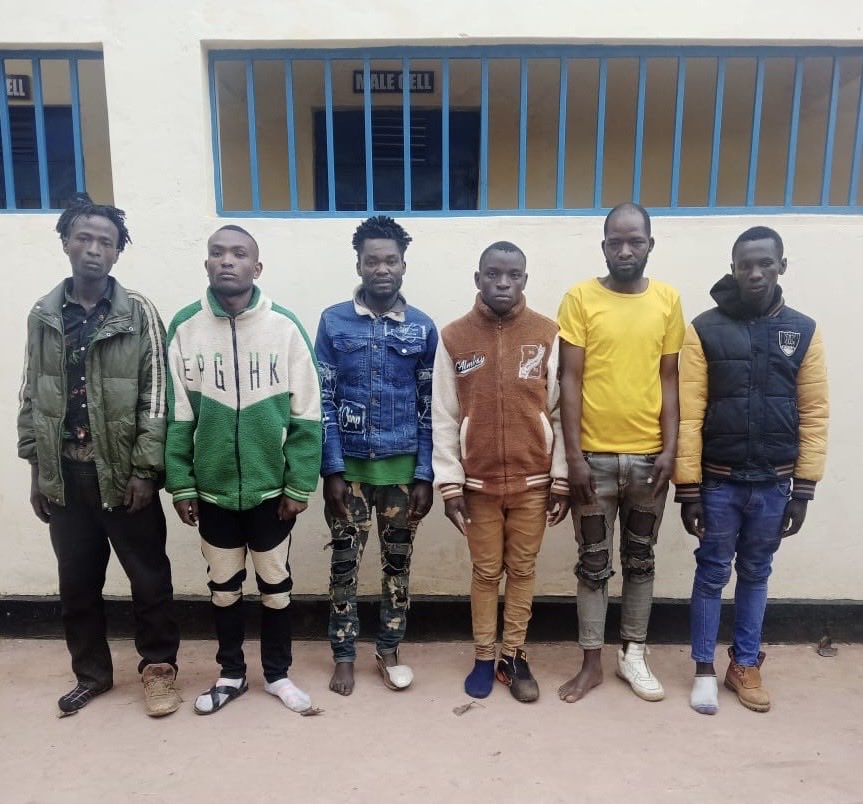
Police in Meru County have arrested six men connected to a brutal gang rape incident that shocked residents of Laare Town on December 1, 2025.

The attack, which occurred during a traditional circumcision procession, has sparked widespread outrage and renewed calls for tighter community policing and regulation of cultural events.

According to officers at Laare Police Station, the incident came to light after distressed members of the public made an urgent call reporting that a young woman had been violently assaulted by a group of men taking part in the street procession.

When officers rushed to the scene, they found the victim in a deeply traumatic state — her clothes torn, her body injured, and her spirit visibly shattered. The police immediately rescued her and arranged urgent medical care at Nyambene Hospital.

In the hours that followed, detectives mounted an intensive manhunt, determined to track down every individual involved. Leveraging forensic intelligence, officers conducted coordinated raids in Irinde, Lubwa, and Kiarama, eventually smoking out six suspects from their hideouts.

“Law Enforcement Officers from Laare Police Station have apprehended six suspects linked to a horrifying gang rape incident that occurred on December 1, 2025, in Laare Town, within Igembe North Sub-County. On that day, a distress call was received from members of the public, revealing a young woman in grave danger, being gang raped by a group of men participating in a traditional circumcision procession,” DCI stated.

“Responding swiftly, officers proceeded to the scene where they found the victim in a state of utter despair; her clothes torn, and her spirit bruised. They escorted her to Nyambene Hospital for medical attention. Determined to bring the perpetrators to justice, law enforcement officers launched an extensive manhunt.”

The arrested individuals have been identified as:

  • Dennis Mwirigi
  • Ismael Gichuge
  • Elijah Muriki
  • Isaac Ntomauta
  • Joseph Marete
  • Phineas Mutali

These six join three other suspects who were arrested earlier on the same day of the attack. All nine are currently in custody, undergoing processing as detectives prepare to present them in court.

Police say the investigation is far from over.

“Utilising forensic leads, they executed targeted raids in Irinde, Lubwa, and Kiarama areas, successfully flushing the six suspects: Dennis Mwirigi, Ismael Gichuge, Elijah Muriki, Isaac Ntomauta, Joseph Marete, and Phineas Mutali out of their hiding outs, subsequently arresting them,” the statement read.

“The six now join three suspects previously arrested on December 1, 2025, all currently in custody, undergoing processing pending arraignment. As the investigation unfolds, detectives remain relentlessly focused on identifying and apprehending additional suspects involved in this heinous crime, ensuring that no perpetrator evades justice.”

The National Police Service is calling on anyone with further information to come forward, emphasising that all reports will be treated confidentially.

As the victim receives ongoing medical and psychological support, law enforcement officers have vowed that no perpetrator will evade the long arm of justice.

0 comment
0 FacebookTwitterPinterestLinkedinTumblrWhatsappTelegramEmail
A National Crisis Demanding Urgent Action The report calls for the government to urgently scale up multi-agency crackdowns, community policing, rehabilitative programs, and political accountability, noting that criminal gangs pose a direct threat to: National security Social stability Economic growth The integrity of elections Security experts are urging the public to remain alert, noting that many gangs are now recruiting minors and using digital platforms to coordinate operations. As the spotlight turns to Nairobi and the affected counties, Kenya confronts a stark reality: criminal networks are evolving faster than the systems designed to stop them. And unless swift, coordinated action is taken, these gangs — from Jeshi Jinga and 42 Brothers to Team Mashamba and Gaza — may soon wield influence rivaling that of legitimate institutions.

A new security brief delivered to President William Ruto has exposed a chilling reality: Kenya is facing an unprecedented surge in gang activity, with Nairobi alone hosting more than 130 active criminal groups, making it the country’s biggest breeding ground for organised crime.

The explosive Jukwaa la Usalama Report, compiled by security experts and intelligence analysts, paints a grim picture of a country where gangs, some barely known to the public, are tightening their grip on neighbourhoods, youth, politics, and even land ownership.

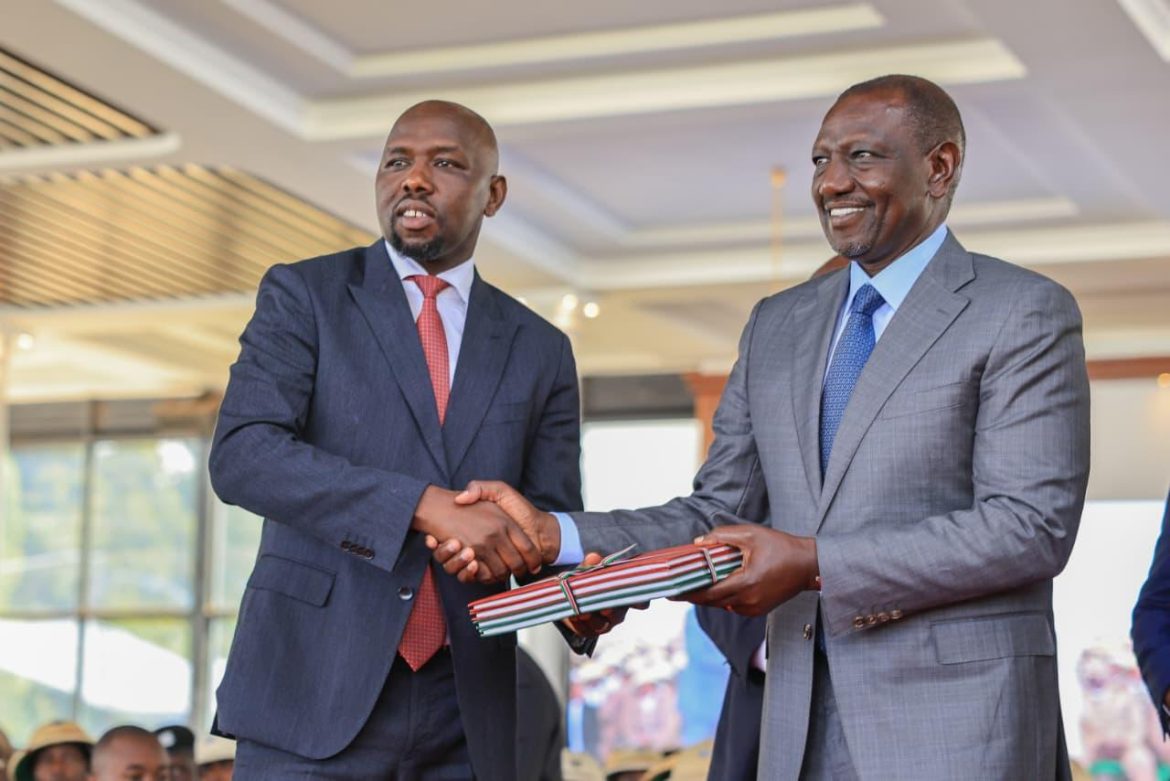
President William Ruto and other security leaders display the explosive Jukwaa la Usalama Report, compiled by security experts and intelligence analysts. PHOTO/@kipmurkomen/X

Nairobi: Kenya’s Gang Capital

According to the report, Nairobi is now the epicentre of the crisis, with over 130 gangs involved in everything from petty extortion to political violence, kidnappings, murder, and election-related mercenary work.

“Some of the gangs are structured and highly organised, while others are amorphous groups that regroup only when hired for assignments,” the report states.

Among those listed are:

  • Jeshi Jinga
  • 42 Brothers
  • M23
  • Kapenguria Six
  • Usiku Sacco

These gangs operate across estates such as Kibera, Dandora, Mathare, Kayole, and Mukuru, often controlling entire zones through fear and brutality.

Crisis Spreads Beyond the Capital

The report warns that gang activity has become a national problem, with the highest concentrations outside Nairobi found in:

  • Kakamega
  • Busia
  • Bungoma
  • Vihiga
  • Kisii
  • Kisumu
  • Homa Bay
  • Tana River
  • Trans Nzoia
  • Mombasa
  • Murang’a
  • Machakos

These gangs, often formed in response to political rivalry, unemployment, and weak social institutions, now influence everything from local elections to land ownership.

In Nakuru, the notorious Confirm and Watizeti gangs remain entrenched in Kivumbini, Bondeni, and Rhonda.

At the Coast, once-infamous groups like Panga Boys have weakened — thanks to rehabilitation and police crackdowns — but newer outfits continue to emerge, especially in Kilifi and Mombasa.

Land Invasion Gangs Rising Fast

One of the most alarming findings is the reemergence of violent land invasion groups.

  • In Machakos, gangs linked to Gaza and remnants of Mungiki are reportedly being used to invade private land and seize mining sites.
  • In Kilifi and Mombasa, groups like Team Mashamba and Mawoza have become the go-to foot soldiers for well-connected land grabbers.

These invasions have left homeowners terrified, businesses displaced, and government institutions unable to access their own land.

Political Gangs Ramping Up Violence

The report warns that with political temperatures rising ahead of future elections, gangs are being courted as tools for:

  • Violent disruptions of rallies
  • Intimidation of communities
  • Enforcement of political loyalty
  • Targeted attacks on rivals

Security analysts note that many of these groups “hibernate” until election periods, when they are reactivated for hire.

Arrests Not Enough — Criminals Keep Returning

Despite frequent arrests, the report paints a worrying trend of recidivism, where gang members return to crime shortly after being released — helped by weak community support systems and lucrative criminal enterprises.

However, intensified intelligence operations have disrupted some networks, and rehabilitation programs at the Coast have shown promise.

A National Crisis Demanding Urgent Action

The report calls for the government to urgently scale up multi-agency crackdowns, community policing, rehabilitative programs, and political accountability, noting that criminal gangs pose a direct threat to:

  • National security
  • Social stability
  • Economic growth
  • The integrity of elections

Security experts are urging the public to remain alert, noting that many gangs are now recruiting minors and using digital platforms to coordinate operations.

As the spotlight turns to Nairobi and the affected counties, Kenya confronts a stark reality: criminal networks are evolving faster than the systems designed to stop them.

And unless swift, coordinated action is taken, these gangs — from Jeshi Jinga and 42 Brothers to Team Mashamba and Gaza — may soon wield influence rivaling that of legitimate institutions.

0 comment
0 FacebookTwitterPinterestLinkedinTumblrWhatsappTelegramEmail
Inspector General of Police Douglas Kanja

The National Police Service (NPS) has issued a strong public alert after a surge in fake and pseudo social media accounts posing as official police platforms.

According to the police, the trend is aimed at misleading, scamming, and misinforming Kenyans.

In a statement released on Tuesday, December 2, 2025, the police warned that the impersonators are now running elaborate schemes designed to trick unsuspecting Kenyans into sharing personal information, sending money, or falling for fabricated alerts and announcements.

Don’t Follow, Don’t Reply, Don’t Trust

The police urged Kenyans to immediately stop interacting with any social media account claiming to be the NPS unless it is official and verified.

The only valid accounts are:

  • Facebook: @NationalPoliceKE
  • Twitter/X: @NPSOfficial_KE
  • TikTok: @NationalPoliceKE

“Any communication or solicitation from unverified accounts should be treated as suspicious,” the statement reads.

How Fake Police Accounts Are Targeting Kenyans

According to cybercrime experts, impersonation cases spike during major news cycles, public incidents, or nationwide security concerns. The creators of these fraudulent accounts exploit panic and confusion to spread:

  • Fake crime alerts
  • False recruitment advertisements
  • Phishing links
  • Scam mobile money requests
  • Politically charged misinformation

Some even mimic the NPS’s official branding to deceive followers.

Police: These Accounts Could Be Run by Criminals

The NPS believes that some of these accounts are operated by individuals or syndicates involved in fraud and disinformation campaigns.

“These accounts are designed to mislead, defraud, or misinform the public,” the Service warned, urging Kenyans to treat all such platforms with extreme caution.

How to Report Fake Accounts

Kenyans are encouraged to immediately report any suspicious accounts to both:

  • The social media platform, and
  • The National Police Service through its hotlines:
    • 999
    • 911
    • 112

Anonymous reports can also be made via:

  • #FichuaKwaDCI (0800 722 203)
  • WhatsApp: 0709 570 000

A Growing Online Threat

The latest alert comes at a time when impersonation, deepfake videos, and fake “official” announcements have become widespread, with many Kenyans increasingly relying on social media for real-time updates.

Cybersecurity analysts warn that fake authority accounts pose a serious risk to:

  • National security
  • Public trust
  • Emergency response
  • Personal safety
  • Online financial security

The NPS is urging Kenyans to remain vigilant, verify before sharing, and always confirm information through verified channels.

As online impersonation grows more sophisticated, the NPS says public awareness will be one of the strongest tools in shutting down these fake accounts.

0 comment
0 FacebookTwitterPinterestLinkedinTumblrWhatsappTelegramEmail